
Jews and Gentiles, What It Takes for Reconciliation. A Give and Take.

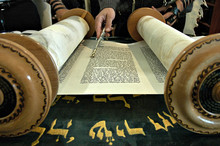
The process of reconciling Jew and Gentile believers as one new man is fraught with difficulty. Just the use of the name Jesus Christ instead of Yeshua Hamashiach triggers the memory of an extensive history of Jewish persecution by Christians in some Jewish believers. The name Yeshua Hamashiach is Jesus Christ in Hebrew. When Jesus walked the earth, he was called Yeshua, not Jesus. I’ve personally heard evangelicals subversively refer to Jewish people as Christ-killers when preaching on the death, burial and resurrection of Jesus Christ from the dead. Curiously, in the same breath, these evangelicals preach that Jesus came to die for our sins. Had the Jews solely been responsible for condemning Jesus to death, they would have been fulfilling God’s will. For the record, Gentiles condemned Jesus to death too. Most Christians ignore the truth that without Jews we wouldn’t have Jesus, salvation or the Bible. I suspect that few Easter sermons last Sunday linked Calvary to Passover and credited Jewish people for safeguarding God’s covenant with mankind. I hope to change this, especially during this time of rising antisemitism.
Jesus told the Samaritan woman “salvation is of the Jews” in John 4. Does this mean salvation is not for Gentiles? Absolutely not! But it does mean the promise of salvation was given to Abraham, birthed through Isaac, the son of promise, and exists as the way every person on the earth is blessed, both Jew and Gentile. Ephesians 2:14-16 says Yeshua put to death the commandments that divided the Jewish people from Gentiles so the two groups could be at peace and one in Jesus Christ. The current state of religion and politics solidifies the divide. One of the most poignant questions dominating politics today is, “do you support or oppose Israel?” Most Americans believe the current conflict with Iran is grounded in this simple question. The secular world will continue to debate this issue but in the Christian arena, there should be no debate. Jesus’ statement to the Samaritan woman is no less true than His follow-up statement in the same encounter, “the hour is coming, and now is, when the true worshipers will worship the Father in spirit and truth; for the Father is seeking such to worship Him” (John 4:23, New King James Version). The later statement triggers several “amens” on a typical Sunday morning while the former statement….ahh, not so much. In my experience, the hesitancy stems from ignorance rather than a deep-seeded hatred for Jews in the larger Christian community.
Most Christians are unaware of the Jewish origins of Christianity beyond the truth that Jesus was born a Jew from the household of David. Knowledge of the role Jewish people played in God’s plan of salvation is largely contained within seminaries and even then the message can be tainted. Recently, I heard a well-known Christian pastor state that he was taught several anti-Jewish falsehoods in seminary. For oneness between the Jew and the Gentile to become a reality, the Gentile community must incorporate the Jewish roots of Christianity in everyday preaching and teaching. But achieving the goal of unity requires action from the Jewish Messianic community as well. Jewish people must embrace the truth that the commandments that God ordained to distinguish the Jewish people as His own possession from other nations have been put to death in the body of Jesus Christ as Ephesians 2:14-16 states. Jesus said the time has come for all to worship the Father in Spirit and in Truth. In Jesus Christ or in Yashua Hamaschiach, unity becomes reality and reconciliation begins.
The words used to communicate the gospel of Jesus Christ must be reexamined to facilitate reconciliation. A norm to confront is the interchangeable use of the word “Jews” and “Pharisees”. Not all Jews in the Bible were Pharisees and not all Pharisees were bad. Joseph of Arimathea and Nicodemus collaborated to care for Jesus’ body after the Crucifixion. The scripture explicitly states that Nicodemus was a Pharisee and Joseph of Arimathea was likely a Pharisee as a member of the Council of Sanhedrin. The scripture identifies Joseph of Arimathea as an uncover disciple (John 3:1; 19:38-42). When Christians righteously boast that Christianity is the most practiced religion in the world and the Holy Bible is the best-selling book worldwide, a shout-out to the Jewish vessels that God used could be woven into the message. No human should receive glory that belongs to God alone but celebrating the Jewish peoples’ contribution glorifies God’s wisdom and master design to redeem mankind.
Gentile and Jewish believers must relinquish traditions and norms to cross the divide and make the new covenant of the Spirit the new norm. This paradigm shift isn’t easy, particularly for Jewish people because a shift means letting go of the past and embracing a Christianity that once viewed them as the enemy and hindrances to the truth. I empathize with Jewish believers as an African American Christian woman. The white-washing of Christianity propagandized a white, straight-haired, blue-eyed Savior and separated Christianity from its African roots. Jesus was resurrected in Jerusalem and the oldest Christian churches are located in Ethiopia and Egypt yet the birthplace of Christianity is widely accepted as Rome. Erroneous teaching regarding Noah’s son Ham branded people of African descent as cursed. Burning crosses illuminated acts of domestic terrorism by the KKK and those draped in white robes were often leaders in the local church. On my way home from church, I stopped at a roadside stand to buy fruit on a hot summer day. It was obvious that the man working the stand had not been to church so I shifted into evangelism high gear and asked the man if he belonged to a local church. I intended to invite him to my church but before I could get the words out he shouted, “I don’t believe in that white man’s religion!” That’s not the first time I’ve gotten that response from a fellow African-American and it likely won’t be the last.
My goal is to foster reconciliation between Jewish and Gentile believers. I believe reconciliation can occur when Jewish believers fully embrace the spiritual truth of the New Covenant that the prophet Jeremiah declared in Jeremiah 31 and Gentile believers fully embrace the truth that salvation is of the Jews as Jesus declared in John 4. This reconciliation can come to fruition by listening and learning from one another.
This space is dedicated to that purpose. I ask you to subscribe to this Substack for upcoming discussions and to support this mission. More on reconciliation between Jews and Gentiles can be found in my soon to be released book entitled, What Have You Done with My Son? You may send comments and contact Michelle Gray at: whathaveyoudonewithmyson@gmail.com.