The Master Designer of the TANAKH… and the Old Testament

This week, Jews and Christians will assemble in their respective places of worship and homes to remember the events in the Holy Bible. Two days ago was Palm Sunday, the beginning of what many Christians refer to as Holy Week. Palm Sunday celebrates the triumphant entry of Jesus into Jerusalem and Holy Week will end on Easter or Resurrection day, the celebration of Jesus’ resurrection from the dead. Tomorrow begins Passover, the celebration of God’s deliverance of the Israelites out of Egypt. Thousands of years before Jesus was born in a manger, Zachariah prophesied the Messiah, the Son of David, would enter Jerusalem riding on a donkey and Isaiah prophesied that He would be led to the slaughter (Zachariah 9:9; Isaiah 53:1-12). Zachariah, Isaiah and the prophets foretold the mystery of the Messiah and what would happened. The TANAKH or what is known by Christians as the Old Testament tells us how it happened. The Book of Genesis, the first book of the Old Testament, through the Book of Malachi, the last book of the Old Testament, unveils the glory of Yeshua or Jesus. The name “Yeshua” means salvation in Hebrew and is the Hebrew name for Jesus. Mary called her little baby Yeshua, not Jesus.
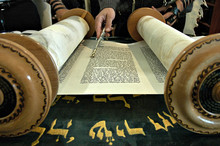
The TANAKH is the Hebrew Bible. The letters T-N-K represent the Torah (Genesis to Deuteronomy), the Nevi’im (the Prophets) and Ketuvim (the Writings). Vowels were added for pronunciation. The TANAKH is ordered differently than the Christian Old Testament. The TANAKH ends with the Book of Chronicles instead of the Book of Malachi. There are other minor distinctions. First, the Hebrew Bible is not divided into the Old Testament and the New Testament, Jewish people acknowledge one Covenant, not an “old” and a “new. The Hebrew Bible does not include the New Testament because Jesus is not acknowledged as the Messiah by non-Messianic Jews.
Second, unlike the Christian Bible, the Hebrew Bible does not divide books such as Samuel, Kings, Chronicles and the minor prophets, thus reducing the 39 books in the Christian Old Testament to 24 books in the Hebrew Bible. Whether you are Jewish and were raised to call the holy text the TANAKH or you are Christian and only know the books as the Old Testament, the most important truth to know is the purpose of the TANAKH or Old Testament is Jesus or Yeshua, whichever name you prefer.
The TANAKH reveals the extraordinary work of the Master Designer in creation’s story and we are benefactors of His brilliance every day. Our bodies contain 37.2 trillion cells that move within pre-ordained pathways to produce basic bodily functions. The engineering genius that created a physical man and woman was at work in the creation of the spiritual new man. Shouldn’t we expect to see a similar brilliance in the redemption of mankind?
II Corinthians 5:17 says if any man be in Christ, he is a new creation, old things are passed away and all things become new. All believers in Christ Jesus become new creations by the Holy Spirit and by requirement. Jesus told Nicodemus that he must be born of water and of the Spirit to inherit the kingdom of God (John 3:3). Human beings are born of water in the natural birthing process. When a pregnant woman’s water breaks, everyone hopes there’s a hospital in sight. The new birth or re-birth isn’t physical but spiritual and accomplished in our hearts. Between 627 BC to approximately 586 BC, Jeremiah prophesied of God’s new covenant with the families of Israel that mankind is subject to today, regardless of race or ethnicity and the reason Jesus marched through Jerusalem as Zachariah prophesied.
Every believer in Jesus, whether Jew or Gentile, is in covenant with God through the promise given to Abraham in Genesis 17. (Please note, for the sake of simplicity, unless otherwise noted, I will use the term “Jew” and “Jewish” when referring to Abraham’s descendants through Issac according to Romans 9:7. I will not distinguish between the terms Hebrew, Israel or Israelites, also for simplicity. Similarly, I will use the term “Gentile” when referring to a non-Jewish believer, not a person who is an unbeliever or not in covenant with God as Paul did in I Corinthians 12:2).
Genesis 1 tells us that God made heaven and earth and created mankind in His own image. The creation of the spiritual new man also began in the Book of Genesis and is no less complex than God’s other creations. Genesis 3:15 proclaims God’s promise of the Messiah who will crush the enemy’s power and Genesis 49:10 declares the Messiah will rule the nations throughout all eternity. Jesus Christ or Yeshua HaMashiach, the name and title for Jesus Christ in Hebrew, is the promised Messiah the prophets spoke of:
(1) Yeshua was born of a Virgin (Isaiah 7:14)
(2) Yeshua was born the Son of God (Isaiah 9:6)
(3) Yeshua descended from the line of David through David’s father Jesse (Isaiah 11:1-2)
(4) Yeshua died on the cross and rose from the dead is the eternal sacrifice for sin (Zachariah 12:10)
Yeshua came so mankind can receive the Holy Spirit. After the fall of mankind and the flood, God called Abraham out of a background of ungodliness and idolatry into an unconditional covenant based on faith and promised to make him the father of many nations. From this promise and covenant would come the promised Messiah and in the promised Messiah, mankind would be reconciled to God by faith. Disobedience and sin had separated the Holy God from His creation but through the Son anyone who believes in Him could partake of His glory and be transformed into a new creation in Christ by the work of the Holy Spirit. The promise was given to Abraham for both Jew and Gentile but the work and heavy-lifting was done by the Jewish people. We owe the Jewish people a great debt of gratitude because the Old covenant written on stone paved the way for the New covenant of the Spirit. The Master Designer formed the Jewish people and entrusted them with His plan. Romans 9:4-5 in the Christian Standard translation says, “they are Israelites, and to them belong the adoption, the glory, the covenants, the giving of the law, the temple service, and the promises. The ancestors are theirs, and from them, by physical descent, came the Christ, who is God over all, praised forever. Amen”. This week, Christians will celebrate Jesus, the promise to the Jewish people and Jews will celebrate Yeshua, the reason for the TANAKH.
The Ministry of Reconciliation
If you’ve reached this point in the article and are enraged because you believe I’m criticizing Jewish people for mischaracterizing the TANAKH, you’ve missed the point completely. My message is not intended to bash Jewish people but to commend Jewish people for the contributions they made and continue to make in bringing Jesus to the world. My goal is to bring reconciliation between the Jew and the Gentile in Christ Jesus, not division. I understand the many landmines there are in this journey. As a member of the African-American community and woman, I understand how comments that are intended to uplift can be received by the subject group as racist. I often say that we need to add “ignorant” to the “racist” and “not racist” labels. Sometimes the speaker is well-intended but speaking out of ignorance rather than with racist intent. All groups need to listen to one another for understanding. When the apostles disagreed about the issue of circumcision for Jewish and Gentile believers in Antioch, they convened in Jerusalem and listened to one another (Acts 15).
My goal is to foster reconciliation between Jewish and Gentile believers. I believe reconciliation can occur when Jewish believers fully embrace the spiritual truth of the New Covenant that the prophet Jeremiah declared in Jeremiah 31 and Gentile believers fully embrace the truth that salvation is of the Jews as Jesus declared in John 4. This reconciliation can come to fruition by listening and learning from one another.
This space is dedicated to that purpose. I ask you to subscribe to this Substack for upcoming discussions and to support this mission. More on reconciliation between Jews and Gentiles can be found in my soon to be released book entitled, What Have You Done with My Son?