Yeshua or Jesus is the Reason for Passover …and The Feast of Unleavened Bread

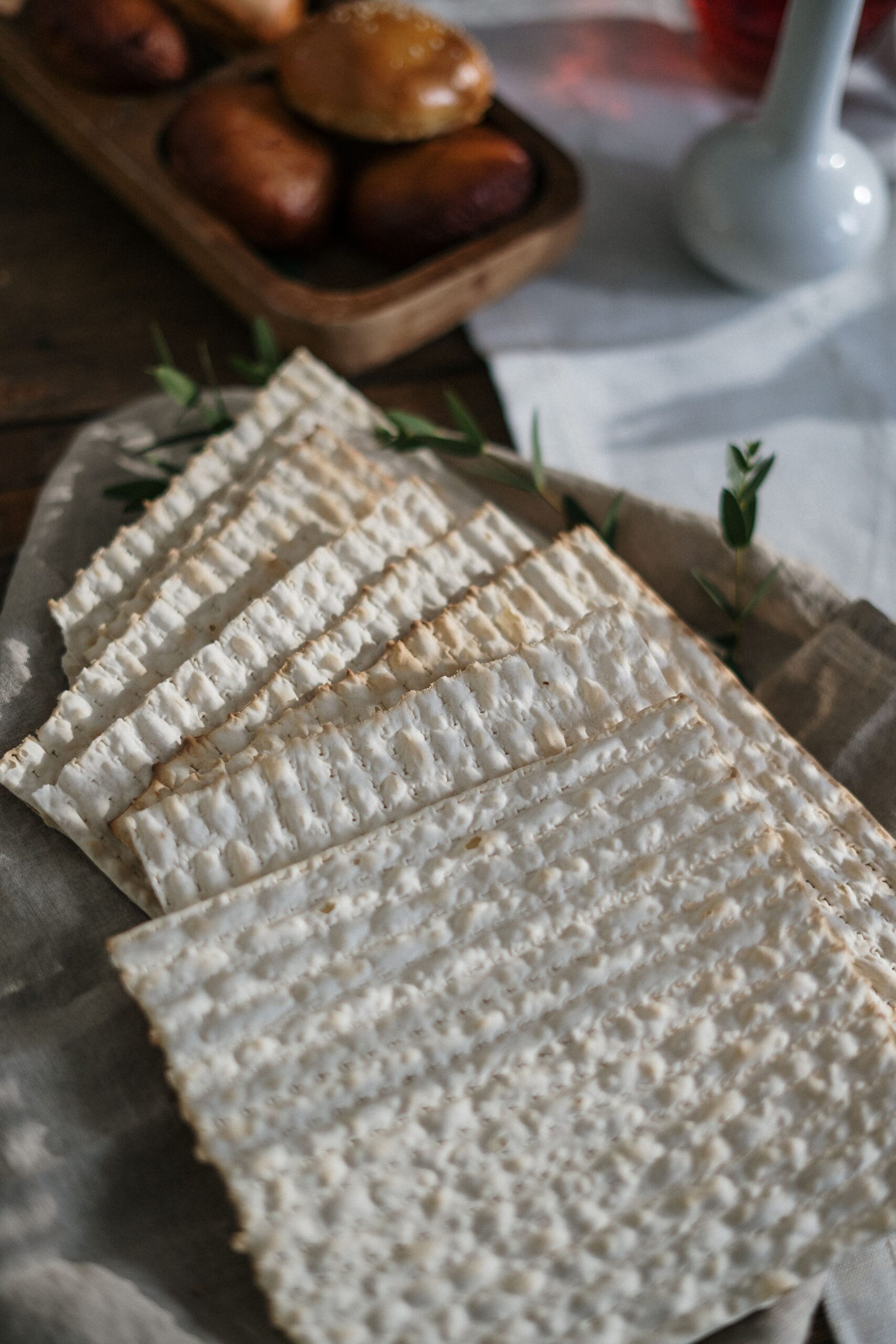
This evening begins Passover. I believe the truth that Yeshua or Jesus is not only the fulfillment of the TANAKH but the reason for the TANAKH is prominently presented in the commandment of the Passover. Yeshua is the Hebrew name for Jesus and means salvation. I encourage you to read my previous post entitled, “The Master Designer of the TANAKH and the Old Testament”. The celebration of Passover is actually the celebration of two festivals although both festivals are singularly referred to as Passover. God commanded the Israelites to observe the Passover and the Feast of Unleavened Bread in Egypt on the fourteenth day of the first month. The Israelites were commanded to take a spotless lamb or goat for each household and spread the blood over the doorposts and lintels. I encourage you to read the miracle of Passover in Exodus 12. The death of Pharoah’s firstborn son and every firstborn in Egypt forced Pharaoh to let the Israelites go to worship the God of Israel. The suffering Egyptians pressured the Israelites to exit the land at once making it impossible for the dough in anyone’s kneading troughs to rise. Leaven in dough causes it to rise over time so God’s people were delivered from Egypt with unleavened bread.
Most believers equate leaven with sin based on Jesus’ warning to the disciples to beware the leaven of the Pharisees and Sadducees (Matthew 16). However, in a parable, Jesus said the kingdom of heaven is like leaven a woman mixes into three batches of flour until all of it is leavened (Matthew 13:3). Jesus’ warning against the leaven contradicts His comparison of leaven to the kingdom of heaven and makes it insufficient to simply define leaven as symbolic of sin. Instead, leaven should be thought of as an agent that causes a reaction and permeates its surroundings. Jesus disapproved of the Pharisees and Sadducees’ leaven and praised the leaven of the kingdom of heaven. In the context of the Passover, unleavened bread is sanctified, pure and untainted like our Lord Jesus Christ.
Jesus is the Bread of Life, the Unleavened Bread, who is sent from God, not of this world but born from above, resurrected from the dead and unaffected by sin, death and the grave. Jesus is God, the expressed image of God and the son of glory. Colossians 2:9 declares the fullness of God’s eternal nature dwells bodily in Christ.
God commanded the Passover and the Feast of Unleavened Bread to be celebrated at the same time as a foreshadowing of Jesus as the eternal sacrifice for the sin of the whole world and the Way, the Truth and the Life for mankind. This was not a random ordinance but a carefully designed commandment foreshadowing the redemption of the Jew and the Gentile in the body and Person of Jesus Christ. After crossing the Red Sea over to dry land, the Israelites worshipped the Lord and declared Him to be their salvation (Psalm 15:2).
When the Israelites were delivered from bondage in Egypt, the Israelites were commanded to celebrate the Feast of Unleavened Bread for seven days beginning on the 15th day of the month, not the 14th day of the month, one day after Passover. Out of Egypt, the Passover and the Feast of Unleavened Bread were commanded on separate days. Passover is celebrated in one day while the Feast of Unleavened Bread continues for seven days, a full week.
Jesus redeemed us by entering the Holy Place once for all time but He is salvation for mankind every day of the week. All mankind must come through the Blood and receive the Holy Spirit. Exodus 12:38 says a mixed crowd of Israelites and Egyptians were delivered out of Egypt on Passover and this foreshadowed Ephesians 2:13-15 which says the Jew and the Gentile become one new man in Christ Jesus. Once sanctified by His Blood, we have peace with God through the Lord Jesus Christ. Passover is one day and separate from the week-long celebration of the Festival of Unleavened Bread to demonstrate Jesus as both the Lamb of God and the Bread of Life of the New Covenant.
The perpetual commandment of the Passover became the legal justification for the Sinless Body and Blood of the Lord Jesus Christ to free mankind from sin to new life in Christ Jesus. Similarly, the commandment of the animal sacrifices is the legal justification for the Cross. The Torah says, “for the life of the flesh is in the blood, and I have given it to you upon the altar to make atonement for your souls; for it is the blood that makes atonement for the soul.’” (Leviticus 17:11, NKJV). Laws are enacted by a governing body and enforced; God is both the authority and the enforcer. By submitting to the Law, the Israelites were maintaining the Law as a placeholder to Christ Jesus. The Master Designer formed the Jewish people and entrusted them with His plan. Romans 9:4-5 in the Christian Standard translation says, “they are Israelites, and to them belong the adoption, the glory, the covenants, the giving of the law, the temple service, and the promises. The ancestors are theirs, and from them, by physical descent, came the Christ, who is God over all, praised forever. Amen”.
The Goal of Messiah in the Passover
Although the Passover is not the beginning of the Jewish people, the Passover is the appointed time when God called forth Israel as a nation unto Himself by the foreshadowed Blood of Christ. The four cups of wine in the Passover meal called the “Seder”, meaning order, coincide with God’s promise to the Israelites in Exodus 6:6-7 and point to Jesus Christ: the cup of Sanctification, the cup of Deliverance, the cup of Redemption and the cup of the Kingdom. Jesus faithfully observed Passover in His earthly ministry, His last Passover on earth is the event Christians refer to as the Last Supper. Jesus said He would not drink the wine again with His disciples until He drinks it new in the kingdom of God.
There are big and small details in scripture that support the truth that the Old Covenant was not only fulfilled by the Messiah but for the Messiah. For example, of the ten plagues God brought upon the Egyptians, the first nine plagues did not affect the Israelites at all. Moses, Aaron and the Israelites were living unaffected in Goshen during the first nine plagues while the Egyptians were swimming in blood, swatting flies, drinking frog coffee and burning dead livestock. But the tenth plague, the death of the firstborn, required the Blood of the Lamb to redeem the Israelites as well as the Egyptians who aligned themselves with the Israelites and escaped death by the Blood.
I recently heard a Jewish woman say, “the Passover is an appointed time and we are to keep the Passover because it’s an eternal ordinance”. Yes, it is an eternal ordinance but it’s an eternal ordinance because of Jesus, not for the glory of the Passover itself. The Passover is an eternal ordinance because the Blood of Jesus is the eternal atonement for our sins (Hebrews 7:27). The Law was given to Moses but grace and truth came through Jesus Christ (John 1:17).
My goal is to foster reconciliation between Jewish and Gentile believers. I believe reconciliation can occur when Jewish believers fully embrace the spiritual truth of the New Covenant that the prophet Jeremiah declared in Jeremiah 31 and Gentile believers fully embrace the truth that salvation is of the Jews as Jesus declared in John 4. This reconciliation can come to fruition by listening and learning from one another.
This space is dedicated to that purpose. I ask you to subscribe to this Substack for upcoming discussions and to support this mission. More on reconciliation between Jews and Gentiles can be found in my soon to be released book entitled, What Have You Done with My Son?